Integrating Autonomous Vehicles and Public Transit
Singapore as A Case Study of the "Expand First-Mile access" Strategy
There are three broad strategies to integrate autonomous vehicles (AVs) with public transport:
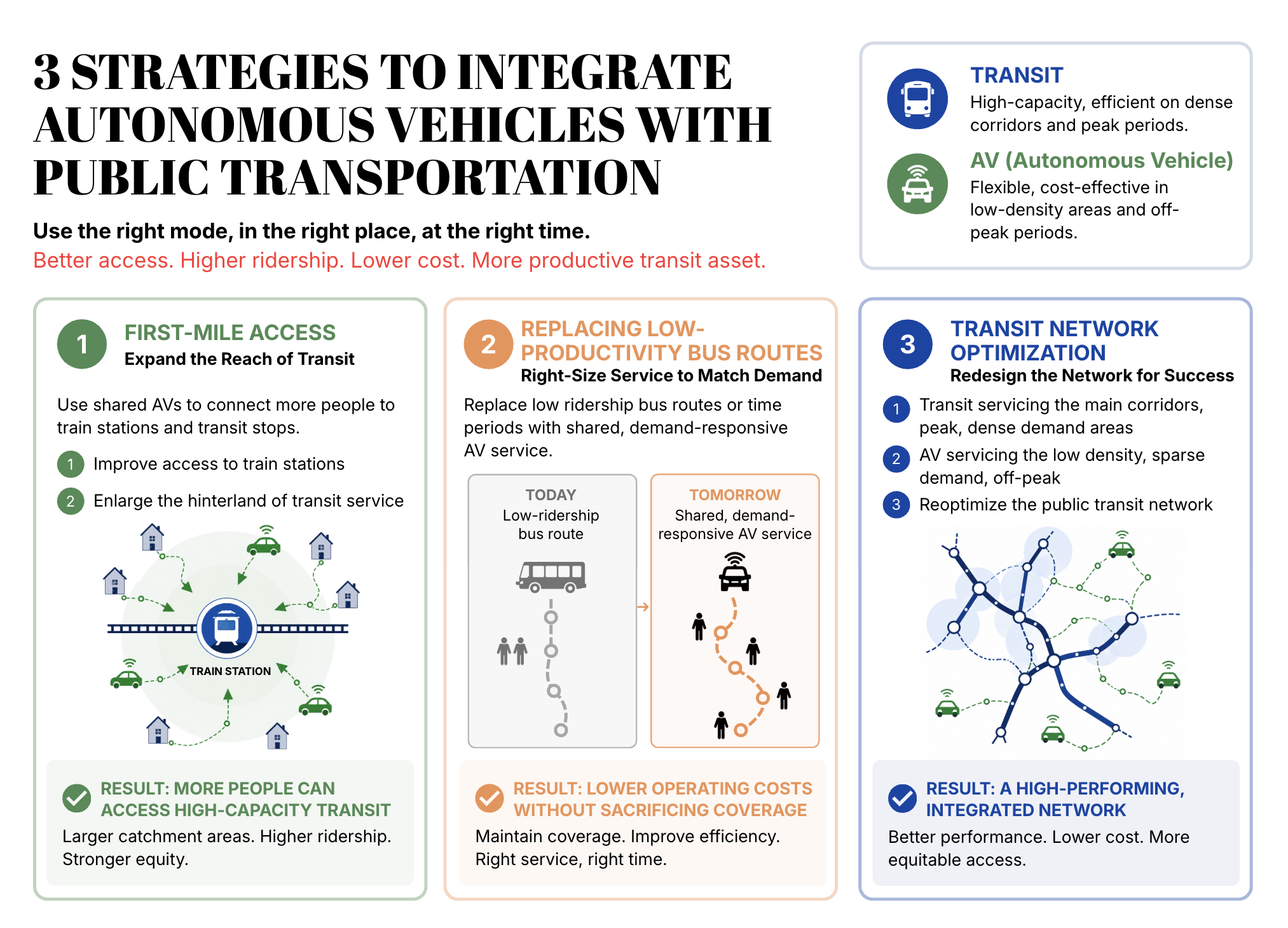
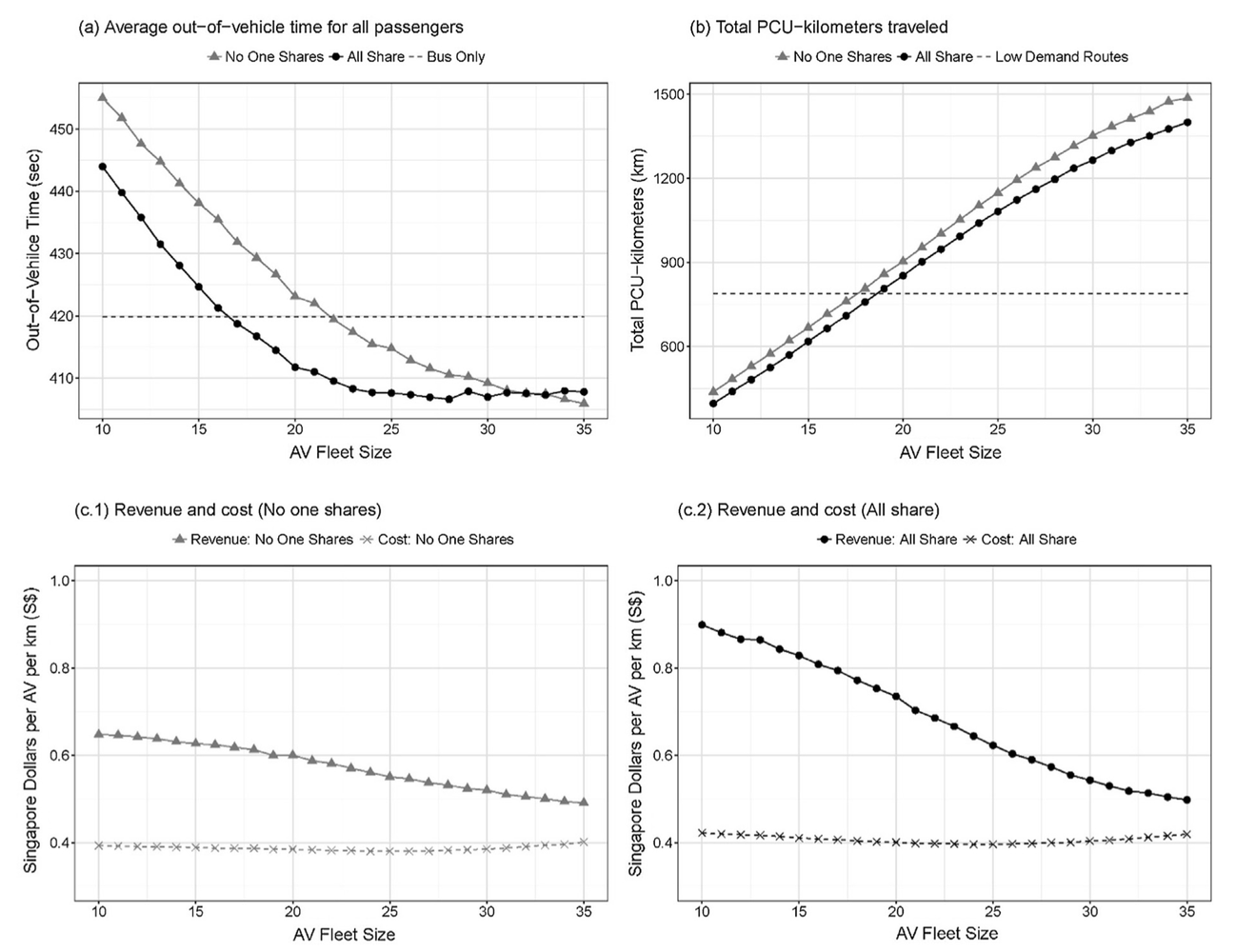
I use Singapore as the case study of the first strategy. To get this right, all three conditions must be met: Better service for passengers; No increase in road congestion ; A viable business model for AVs.
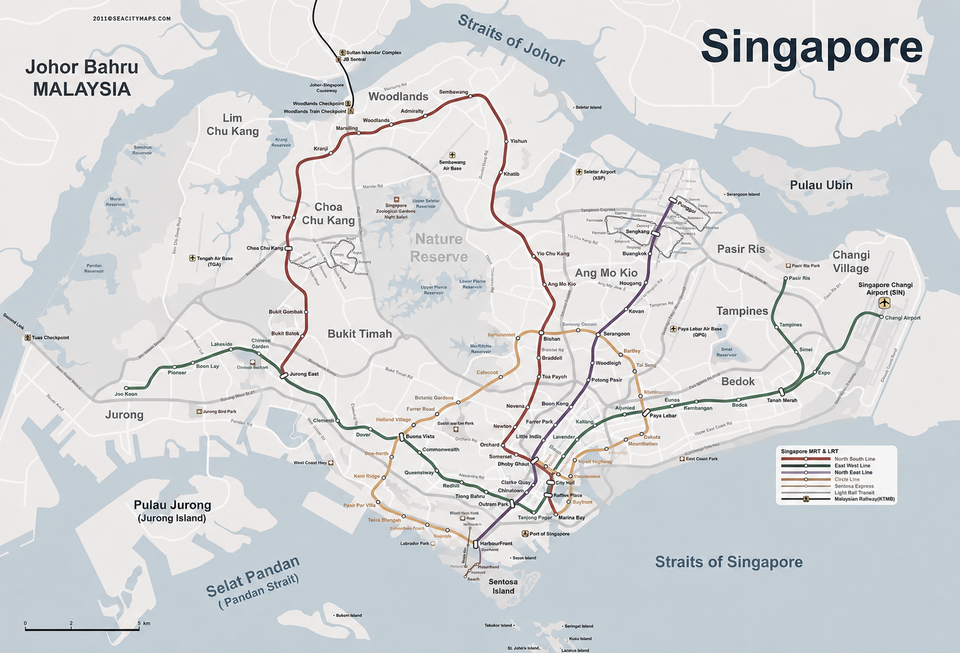
Singapore—a city-state with one of the world’s most efficient public transport systems. The MRT and LRT systems are dense, fast, and well-used.
How can AVs help solve the first-mile problem—getting people from their homes to transit stations efficiently, affordably, and comfortably?
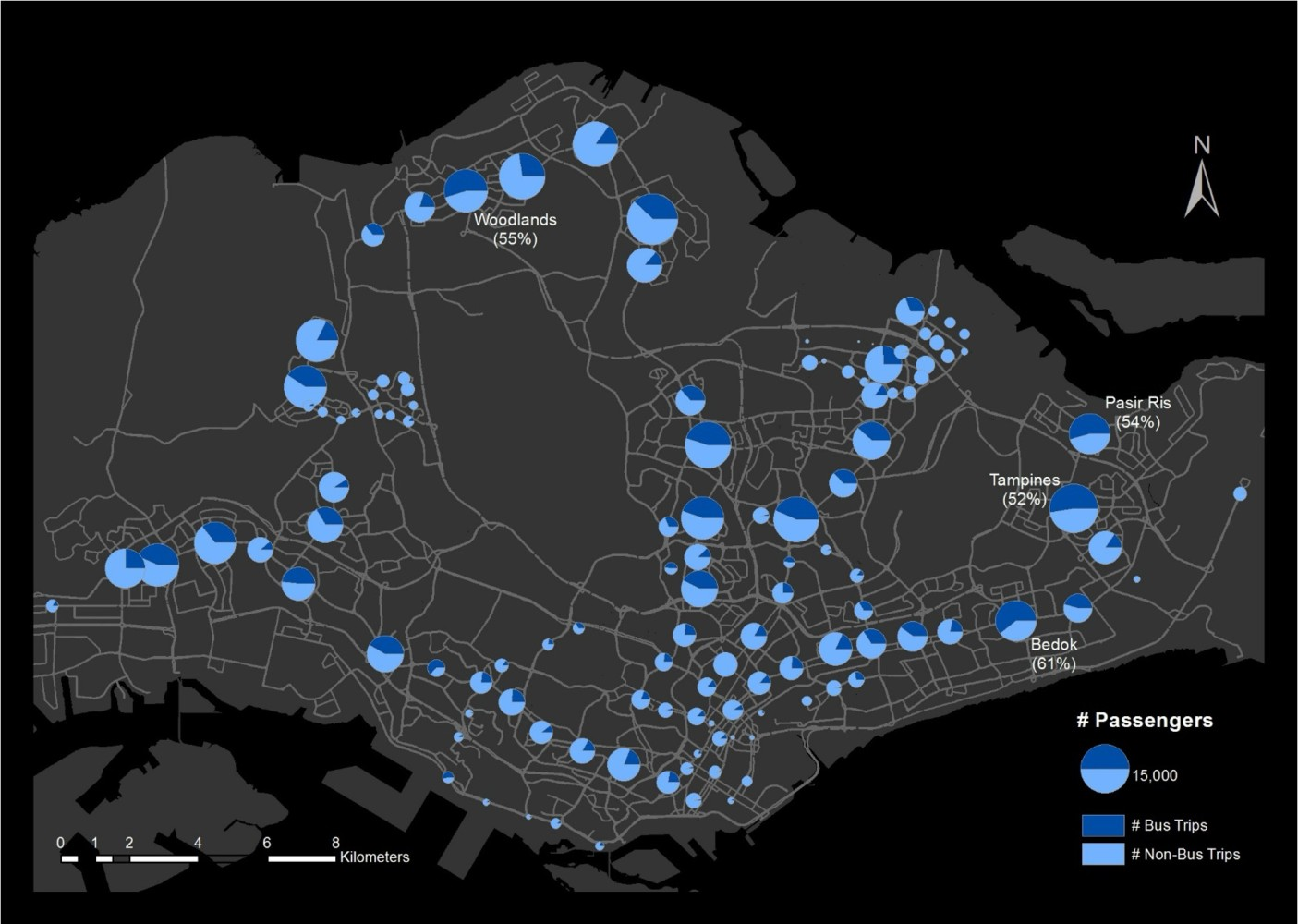
The map below shows MRT ridership and first-mile access patterns during the morning peak hours (7–9 am), revealing the crucial role of buses in connecting commuters to the train network.
Tampines: 52% rely on buses ; Woodlands: 55%; Bedok: 61%
A pressing need to strengthen first-mile connectivity.
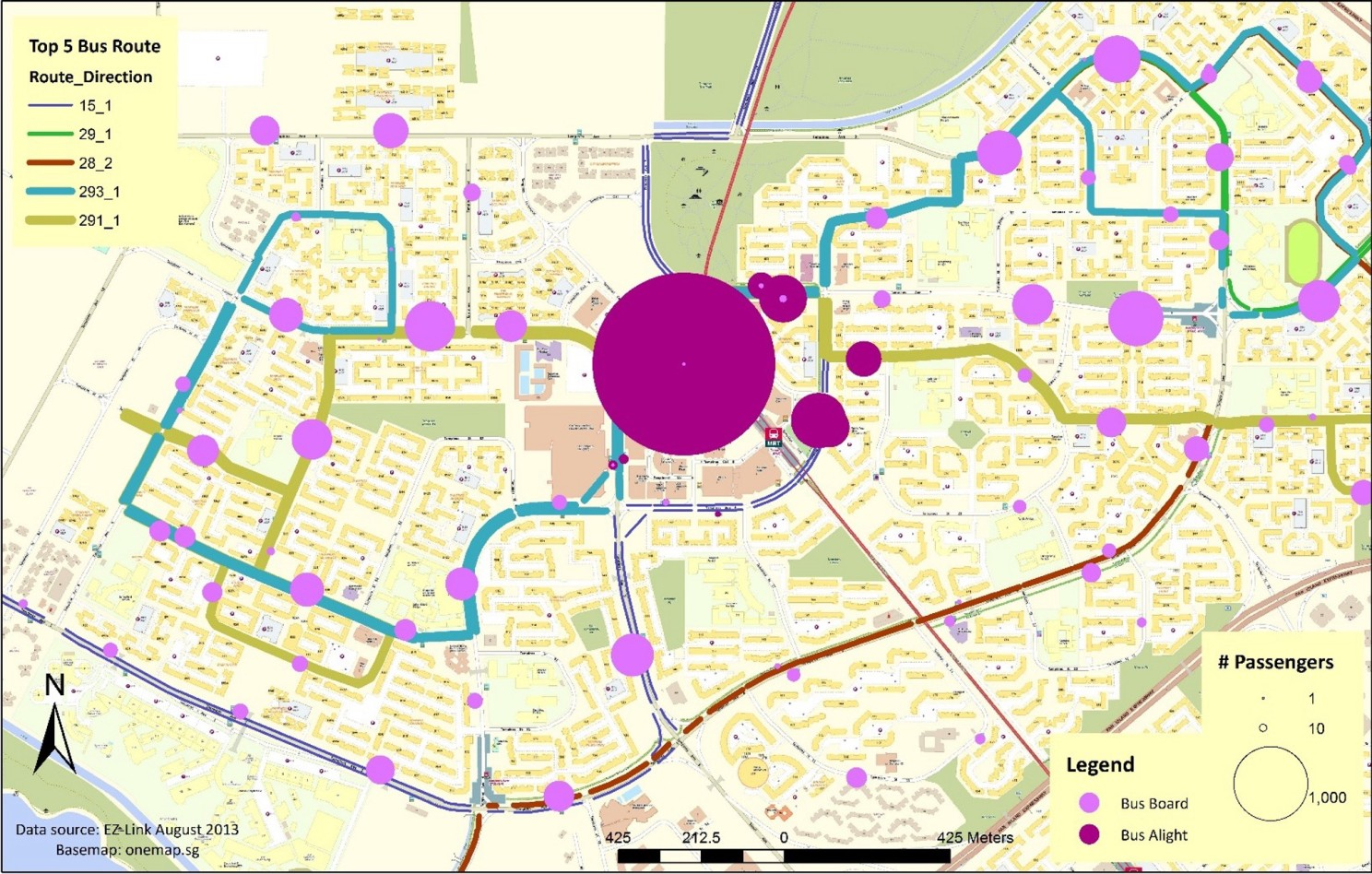
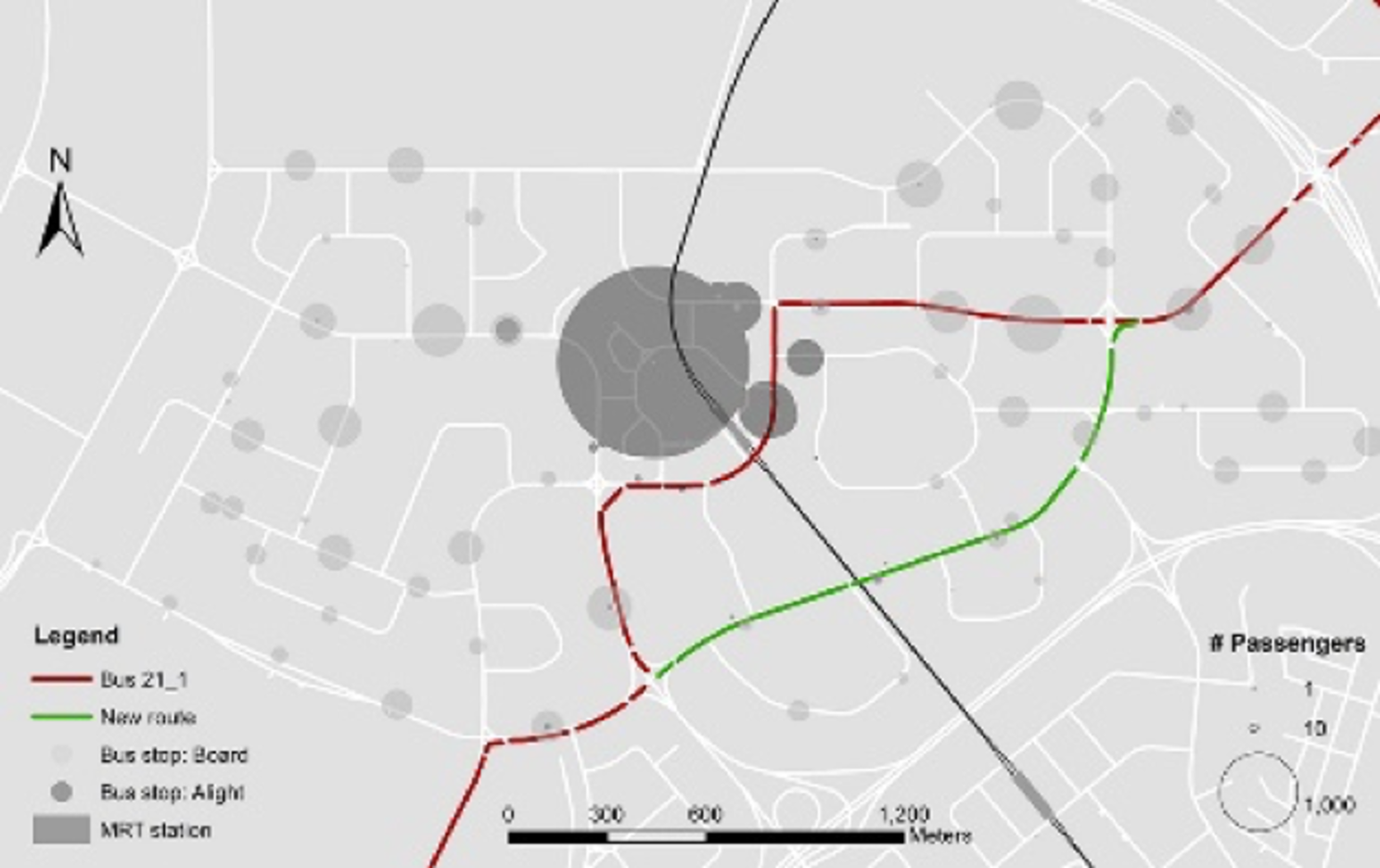
Tampines is a high-density residential area. We conducted a detailed mapping of bus boardings and alightings around the MRT station during peak hours, giving us a granular view of travel behavior.
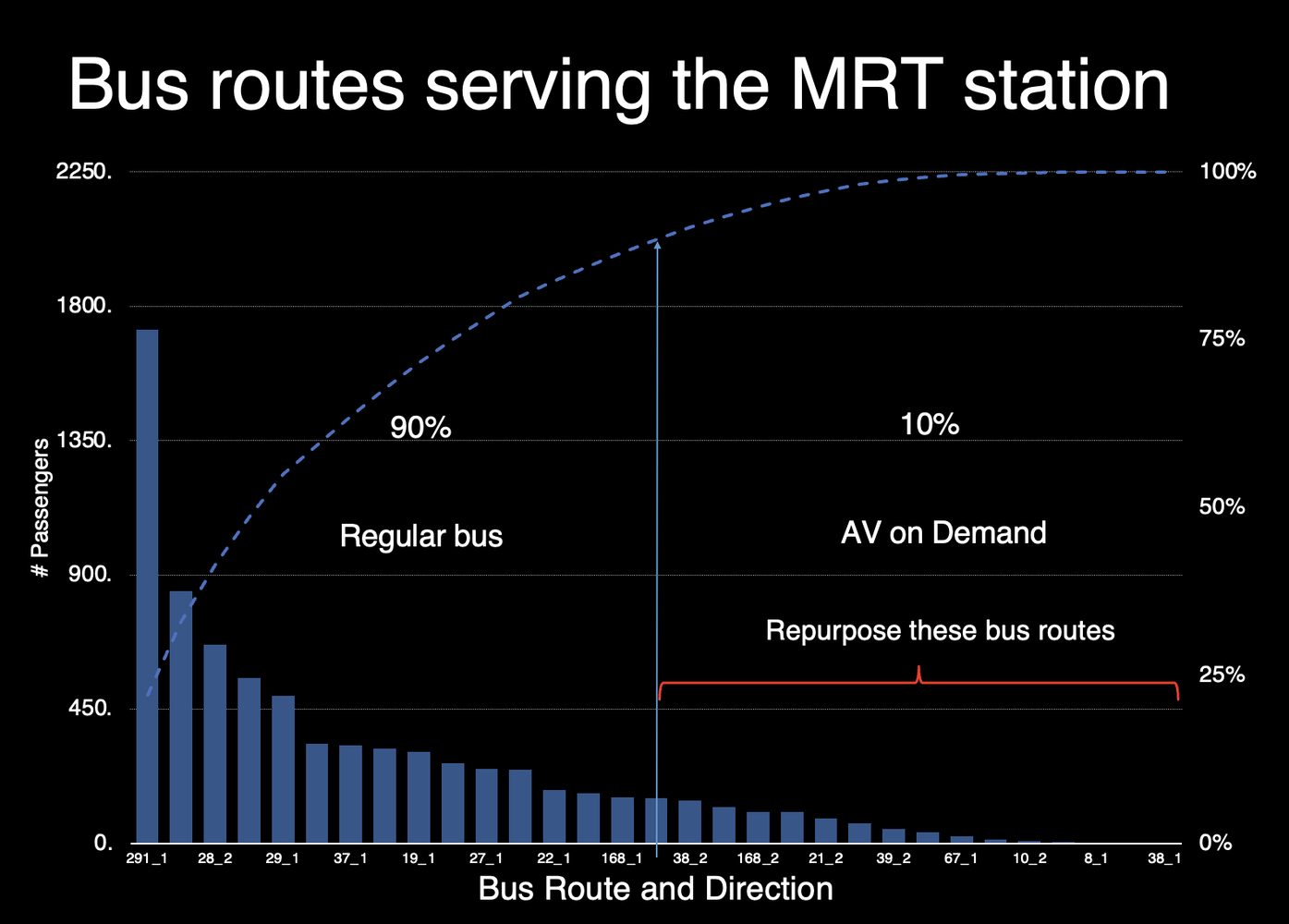
Not all routes are created equal.
In Tampines, we proposed a hybrid strategy:
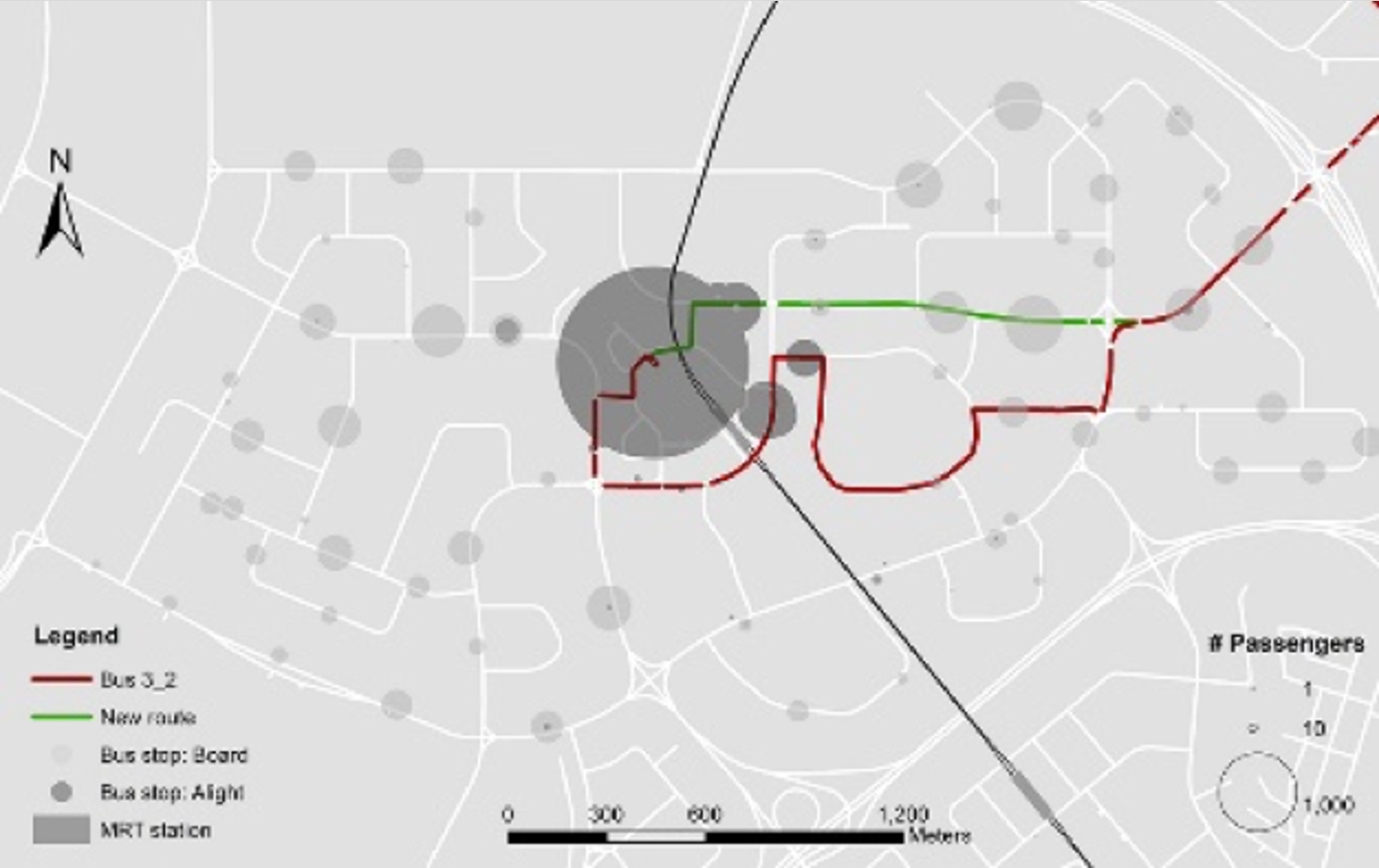
We didn’t eliminate those 11 routes. Instead, we strategically rerouted them—allowing buses to focus on high-demand corridors, while AVs serve scattered, low-density areas.
Routes like Bus 3_2 and Bus 21_1 were used as examples—showing how small redesigns can unlock AV integration.
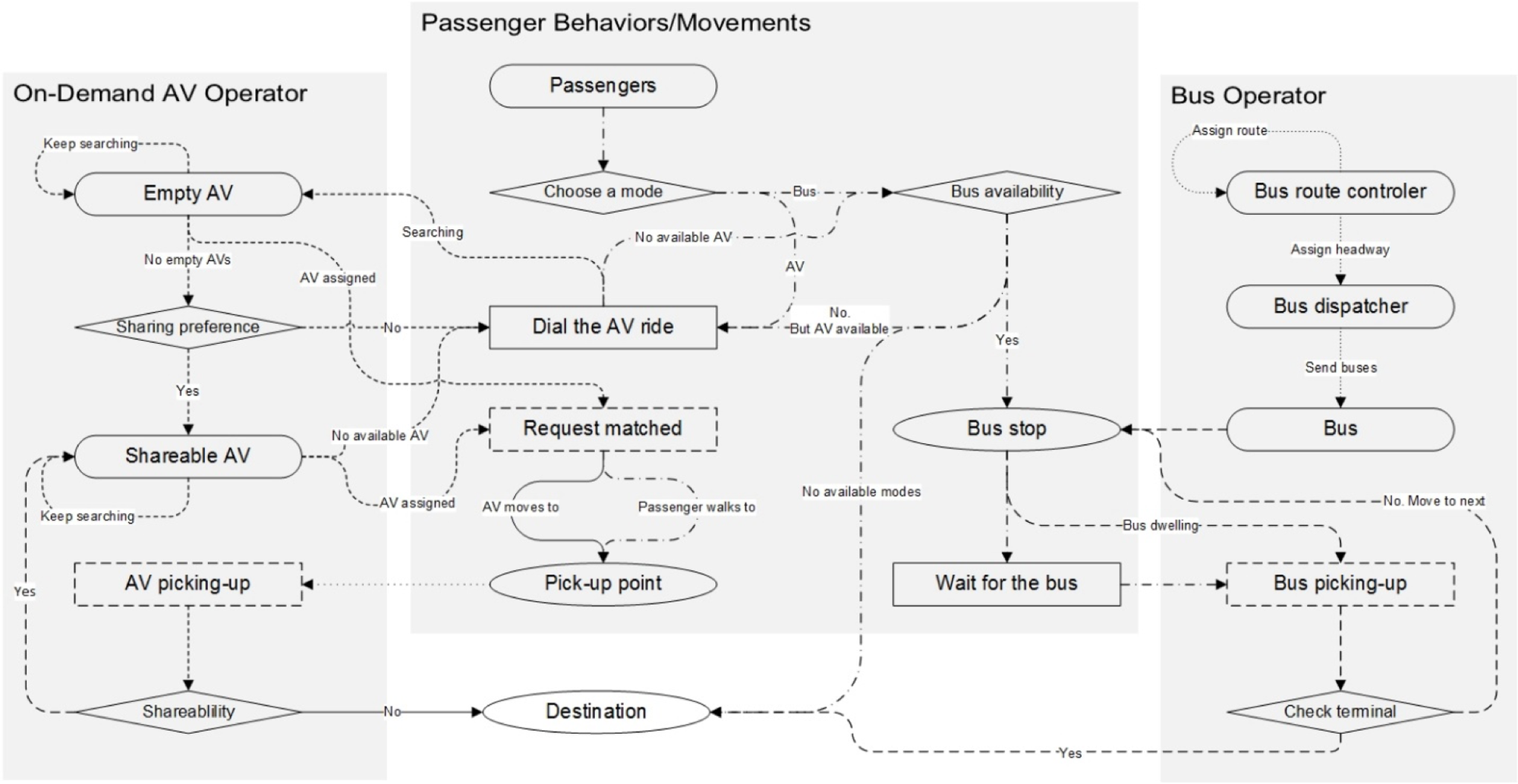
We built an agent-based simulation to model three key actors:
We measured three outcomes:
To make this work, we must hit all three goals:
The window for an integrated AV-PT system exists – but is narrow.
Integration itself does not guarantee success. It requires intentional design.
[P.S. The narrowness may reflect that the fact that the existing bus network in Singapore is efficient to start with. ]
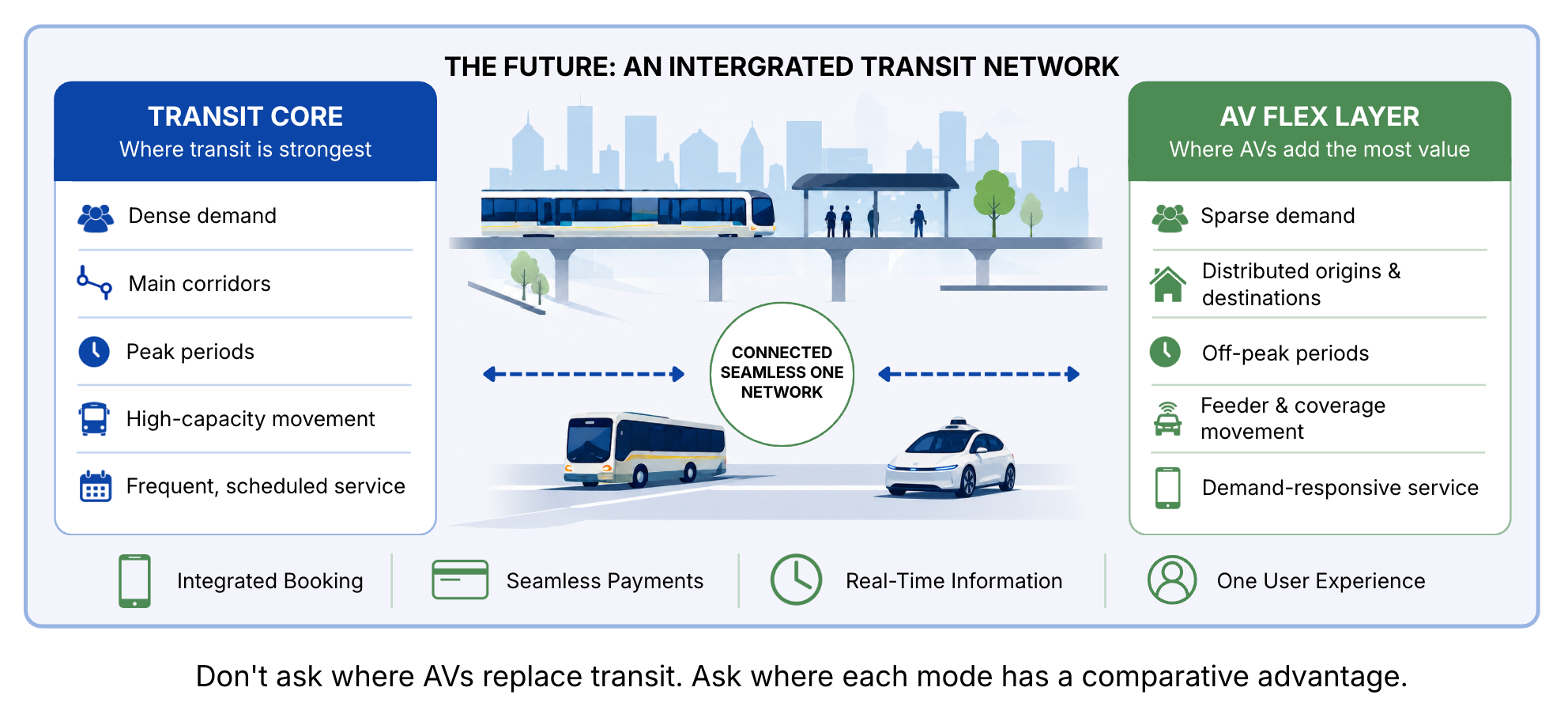
Imagine a system where: Trains serve trunk corridors. Buses serve high-density feeders. AVs fill in the rest—on-demand, shared, and responsive.
— Jinhua
Methodology Paper: Integrating Shared Autonomous Vehicle in Public Transportation System: A Supply-Side Simulation of the First-Mile Service in Singapore, Transportation Research Part A (full paper)
Get my memos, Mobility Forum conversations, and practical insights from frontier research and real-world practice.